
Malaysian SMEs: Seek Advisory Before Jumping to Loans
October 1, 2026
The loan-first reflex among Malaysian SMEs
When sales feel promising, many Malaysian SME owners open a financing form before they open a spreadsheet. The instinct is understandable. Growth needs cash, banks and development finance institutions advertise facilities, and waiting can feel like leaving demand on the table. The quieter question is whether the business yet knows what the money must do.
The practical question for many Malaysian SMEs is timing: when business advisory tends to help before you jump straight into a loan application, and what advisors usually clarify before expansion financing. Soft citations point to public pages you can re-read later.
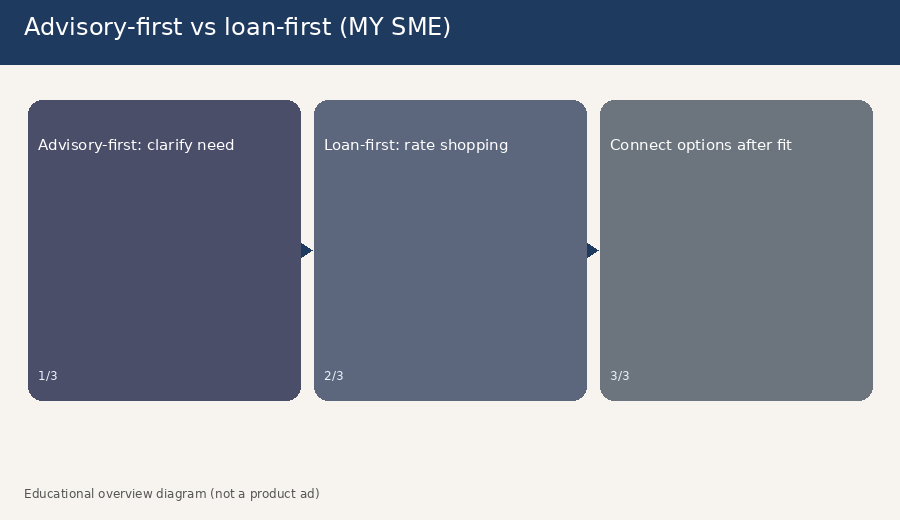
Two common routes. Clarifying cash, purpose, and capacity first usually beats fixing a weak application later.
What business advisory usually clarifies first
Advisory is not a magic stamp of approval. At its best it is a structured pause: diagnose the cash reality, name the financing purpose, and test whether the company can service new obligations without starving operations. Owners who sell well but still scramble for payroll often need diagnosis more than a larger facility.
Typical clarifications sound plain. Are receivables stretching because customers pay late, or because pricing and costing are soft? Is the squeeze seasonal working capital, equipment, a new outlet, or owner drawings mixed into company cash? Public pages on SME business advisory services often frame that work as explore, advise, and connect: assess needs, map eligible options, then introduce financing partners. Treat those steps as a checklist you can run even before any formal meeting.
Also separate capacity building from the loan conversation. Accounting habits, digital tools, and a cleaner set of management accounts do not replace financing, but they make applications less painful and reduce the chance you borrow to paper over a process problem.
When a commercial loan still makes sense
Advisory first does not mean never borrow. A commercial loan can be the right tool when the purpose is clear, repayment is modelled against realistic cash inflows, and the facility type matches the job. Working capital for a known receivables cycle is different from term financing for machinery. Mixing both into one vague “growth loan” is how interest and covenants start fighting the business.
Before you compare rates, write a one-page purpose note: amount, use of funds, expected cash release date, and what happens if sales lag by two months. Then scan public overviews of commercial loan financing the way you would scan a product catalogue: features and eligibility cues, not a verdict. Bank Negara Malaysia’s map of financing support for SMEs is a stable place to see how bank financing sits beside development funds, microfinance channels, and advice touchpoints.
If debt already feels heavy, pause the expansion story and seek education or counselling channels such as AKPK financial counselling rather than stacking another facility on hope.
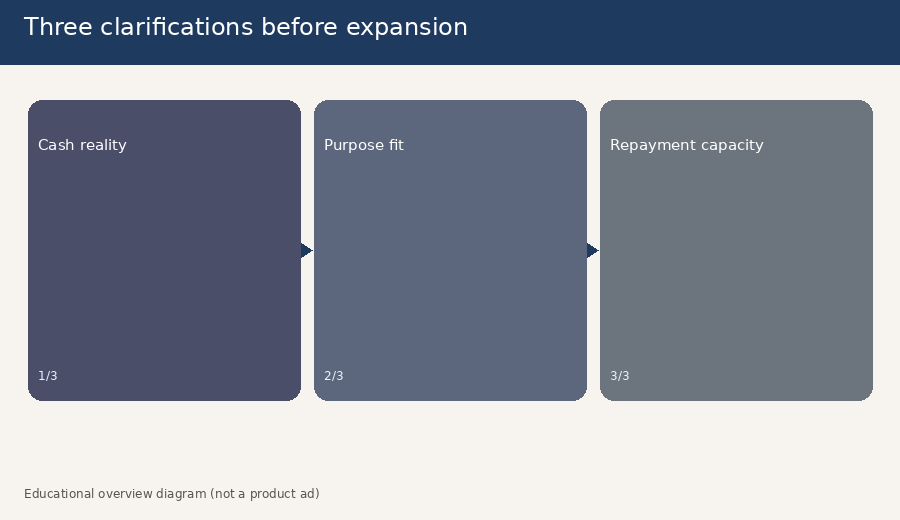
Three questions before expansion money: cash truth, purpose fit, and capacity to repay.
Expansion financing needs a plan, not a wish
Business expansion financing is attractive language. It can also hide three different jobs: opening another site, entering a new channel, or buying capacity to fulfil existing orders. Advisors press on unit economics for the new step, management bandwidth, and whether the existing core is already cash-stable. Expanding a fragile base multiplies the fragility.
A useful pre-loan pack is modest. Latest management accounts, a 13-week cash view, a simple use-of-funds table, and assumptions you can defend without marketing adjectives. When you later review pages that discuss business expansion financing, you will already know which facility shape fits: shorter working-capital style support versus longer-term funding tied to assets or a defined project.
For a clean refresher on why profit and cash diverge (the gap that sinks many expansion stories), this beginner walkthrough of the cash flow statement is worth a pause before you size any facility:
Related watch: a plain-language cash flow statement primer before you fund expansion on paper profits.
Public maps for advice and financing in Malaysia
Malaysia already publishes touchpoints so owners need not guess alone. SME Corp’s MSME Hub advisory overview describes where enterprises can seek business counselling and programme information. Pair that with BNM’s SME financing page for the lender and fund landscape, and keep Product Disclosure Sheets for any facility you shortlist.
This month, try a small pass. Write the financing purpose in one sentence, sketch thirteen weeks of cash, and only then decide whether you need advisory clarity, a commercial facility, or a staged expansion plan. Malaysian SME growth feels less frantic when the question leads and the loan follows.